



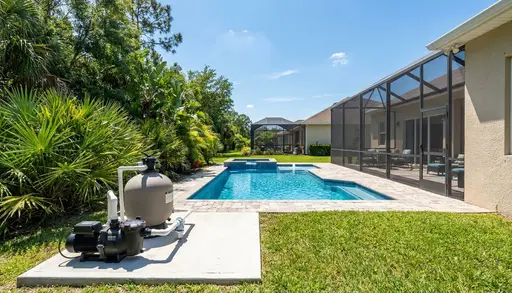
Key Takeaways
- A variable speed pool pump in Central Florida typically costs more up front than a single-speed pump — broadly $1,200 to $3,000 installed — but can cut pump electricity use dramatically.
- Running slower is the whole trick. Under the pump affinity laws, halving a pump's speed cuts its power draw to roughly one-eighth while still moving half the water.
- Federal efficiency standards that took effect in July 2021 mean most replacement inground filter pumps sold today are variable speed anyway.
- Payback is often a few years for Ocala homeowners, because Florida pools circulate year-round rather than sitting closed for winter.
In most of the country, a pool pump runs for five or six months and then gets shut down for winter. In Ocala, The Villages, and the rest of Central Florida, it runs every day of the year. That makes the pump one of the largest single electricity users in many Florida homes — and it is why the type of pump on your equipment pad matters more here than almost anywhere else. If you are budgeting a new pool, planning a renovation, or replacing a pump that has finally quit, here is what a variable speed pool pump costs in Ocala and what it can save.
What Does a Variable Speed Pool Pump Cost in Ocala, FL?
A variable speed pool pump in the Ocala area generally runs $1,200 to $3,000 installed, depending on the brand, horsepower rating, whether automation is included, and how much of the existing equipment pad needs updating. A single-speed pump of similar size has historically cost several hundred dollars less, but is far more expensive to operate over time.
Several factors push the price toward one end of the range or the other:
- Pump size and brand. Larger pumps and premium product lines with built-in controls cost more.
- Automation. Pairing the pump with a smart controller or app-based automation system adds cost, but makes scheduling multiple speeds effortless.
- Equipment condition. If the filter, valves, or electrical service at the pad are aging, a pump replacement is often the moment homeowners choose to update them too.
- New build versus replacement. On a new pool, a variable speed pump is usually part of the equipment package, so the incremental cost is folded into the overall project.
These are broad planning ranges rather than quotes. Your actual cost depends on your specific pool and equipment, so a site visit is the only way to get a firm number.
How a Variable Speed Pump Saves Energy
A variable speed pump saves energy by running for longer at a much lower speed instead of running briefly at full speed. Because a pump's power draw falls roughly with the cube of its speed, a modest reduction in speed produces an outsized reduction in electricity use, while the pool still gets its full daily turnover of water.
This relationship comes from the pump affinity laws, which describe how centrifugal pumps behave. Flow changes in proportion to speed, but power changes roughly with the cube of speed. In practical terms:
- At about 75% speed, a pump uses roughly 42% of its full-speed power.
- At about 50% speed, it uses roughly 12.5% of its full-speed power — about one-eighth — while still moving about half the water.
A traditional single-speed pump has only one setting: full speed. A variable speed pump uses a permanent magnet motor and an onboard drive that let it run at whatever speed a task actually needs. Gentle, quiet filtration can happen at low speed for most of the day, and higher speeds can be scheduled only when they are useful — running a suction cleaner, operating a water feature, or circulating through a solar heating system. Permanent magnet motors are also generally more efficient than the induction motors found in older single-speed pumps, and many owners notice that they run much more quietly.
Variable Speed vs Single-Speed Pump: Florida Operating Costs
For a typical Central Florida pool, switching from an older single-speed pump to a variable speed pump can reduce pump electricity costs by roughly half or more. Using Florida residential electricity rates of about 15 to 17 cents per kilowatt-hour, that can mean savings in the range of several hundred dollars a year.
Here is an illustrative comparison. Actual numbers vary widely with pool size, plumbing, filter type, and run schedule, so treat this as a way to understand the math rather than a prediction for your home:
- Older 1.5 HP single-speed pump drawing roughly 1.5 to 2 kilowatts and running 8 hours a day uses about 360 to 480 kWh a month — roughly $55 to $80 a month at Florida rates.
- Variable speed pump running 12 hours a day at a low filtration speed, drawing perhaps 200 to 400 watts, plus a short daily period at higher speed, might use around 100 to 180 kWh a month — roughly $15 to $30 a month.
Because Florida pools run twelve months a year, the difference compounds quickly. Savings in the range of $400 to $700 a year are a reasonable illustration for many homes, which is why the higher purchase price is often recovered within a few years. Check your own utility bill for your exact rate; Ocala Electric Utility, Duke Energy Florida, SECO Energy, and Clay Electric customers will each see slightly different numbers.
The ENERGY STAR pool pump program lists certified models and is a useful starting point for comparing efficiency ratings between brands.
Are Variable Speed Pool Pumps Required in Florida?
For most inground pools, effectively yes when a pump is replaced. U.S. Department of Energy efficiency standards for dedicated-purpose pool pumps took effect on July 19, 2021, and the efficiency levels they set for most inground filter pumps are generally met only by variable speed designs. In practice, that means most replacement pumps on the market today are variable speed.
Florida's building and energy codes also address pool pump and heater efficiency for new residential pools. Requirements can be updated with each code cycle, and local permitting offices in Marion County and the surrounding counties apply the version currently in force. A licensed pool contractor will be familiar with what applies to your project, and you can read more about local rules in our guide to pool permits in Marion County.
If you have an older single-speed pump that is still running, you are not required to replace it today. But when it fails, the replacement you buy will almost certainly be a variable speed model, so it is worth planning for that cost in advance.
When Should You Upgrade Your Pool Pump?
The most cost-effective time to switch to a variable speed pump is when your existing pump fails, when you are already renovating the pool, or when you are building new. Replacing a working single-speed pump early can still make financial sense in Florida, because year-round operation shortens the payback period.
Signs that a pump upgrade is worth considering:
- Your pump is loud, hot to the touch, or tripping its breaker — all reasons to call a licensed professional rather than troubleshoot electrical issues yourself.
- Your electric bill climbs noticeably in months when the pool runs longer.
- You are adding a heater, solar system, water feature, or automation, any of which benefits from adjustable flow.
- You are planning a pool renovation or remodel and want to update the equipment pad at the same time.
For homeowners building a new pool, the pump is usually one line in a larger equipment package. If you are comparing new fiberglass pool options, it is worth asking which pump and automation are included in each proposal, because running costs over the life of the pool can matter as much as the upfront price. Pump and equipment upgrades can also often be included in pool financing alongside a larger project.
Pump replacement involves electrical and plumbing connections and should be handled by a licensed professional. For coverage details on any specific pump, refer to the manufacturer's own warranty terms.
Frequently Asked Questions
How much does a variable speed pool pump cost in Ocala, FL?
Most Ocala-area homeowners can expect a broad range of about $1,200 to $3,000 installed, depending on pump size, brand, automation, and the condition of the existing equipment. A site visit is needed for an accurate price for your pool.
How much money does a variable speed pump save in Florida?
Savings vary with pool size and run schedule, but replacing an older single-speed pump often cuts pump electricity use by half or more. At Florida electricity rates of roughly 15 to 17 cents per kWh, that commonly works out to several hundred dollars a year because Florida pools circulate year-round.
How many hours a day should I run a variable speed pool pump in Florida?
Many Florida owners run a variable speed pump at low speed for 10 to 14 hours a day or longer, with short higher-speed periods for cleaning or features. The goal is to turn over the full pool volume at least once a day; the right schedule depends on your pool size, filter, and water conditions.
Do I have to replace my single-speed pool pump?
No. A working single-speed pump can stay in service. Federal efficiency standards that took effect in July 2021 apply to new pumps being sold, so when your current pump eventually fails, the replacement for most inground pools will be a variable speed model.
Planning a Pump Upgrade in Central Florida
Pool equipment decisions are easier to make before something breaks in the middle of July. Lucaya Pools works with homeowners across Ocala, The Villages, Dunnellon, and the surrounding Marion, Sumter, Lake, Citrus, and Levy county areas on new fiberglass pools and renovations, and equipment efficiency comes up in nearly every one of those conversations.
If you are weighing a variable speed pump for a new pool or an existing one, call (352) 843-3644 or reach out through our contact page to talk through the options that fit your pool and your budget.
This article is general educational information about pool ownership. It does not describe the methods, specifications, or warranties of Lucaya Pools. Construction and installation practices vary by site and follow the pool manufacturer's specifications.