


Key Takeaways
- Pool deck resurfacing in the Ocala area generally runs $6 to $15 per square foot depending on the material, which puts a typical 700-square-foot deck somewhere in the $4,500 to $10,500 range.
- Surface temperature matters more than almost anything else in Central Florida — unshaded plain concrete can climb past 130°F on a July afternoon, while lighter-colored pavers, travertine, and textured cool-deck coatings run noticeably cooler underfoot.
- Cracking, spalling, chalky texture, and lifted or sunken sections are the four signs most Marion County homeowners notice first, and only some of them are cosmetic.
- Resurfacing a sound deck usually costs a fraction of tearing it out and starting over, so the real decision comes down to whether the concrete underneath is still structurally solid.
The pool deck is the part of a Florida backyard that takes the worst beating. It sits in full sun most of the year, absorbs a daily cycle of chlorinated splash-out and afternoon thunderstorms, and gets walked on barefoot by people who notice every rough patch. In Ocala, The Villages, and across Marion County, decks tend to show their age well before the pool itself does.
Here's an honest look at what pool deck resurfacing costs in Central Florida, how the material options compare, and how to tell whether your deck is a candidate for a new surface or a full replacement.
What Does Pool Deck Resurfacing Cost in Ocala?
Most pool deck resurfacing projects in the Ocala area land between $6 and $15 per square foot, with simple textured coatings at the low end and paver or travertine work at the top. For a common 600 to 800 square foot deck, that works out to roughly $4,000 to $12,000 for the finished surface. Treat those numbers as planning brackets, not a quote — deck size, existing condition, and material choice move the total substantially.
The variables that actually drive the price:
- Square footage — the single biggest factor, and one homeowners routinely underestimate. Measure the walking surface, not the pool.
- Material — a knockdown texture or acrylic coating is the budget option; pavers and natural stone can cost two to three times as much per square foot.
- Condition of the existing slab — a deck with widespread cracking or settled sections needs more preparation and repair before any new surface goes down, and that shows up in the bid.
- Color, pattern, and borders — decorative banding, multiple colors, and stone-look patterns add labor and material cost.
If you're weighing a deck refresh alongside other work, it's usually cheaper per square foot to bundle it with a broader project. Homeowners already considering pool renovations and remodels often find the deck is the change that makes the biggest visual difference for the money.
When Does a Florida Pool Deck Need Resurfacing?
A Central Florida pool deck typically needs attention somewhere between 8 and 15 years after it was finished, though sun exposure, drainage, and the original material change that window considerably. The clearest signal is texture: when a deck that used to feel grippy underfoot starts feeling either slick or abrasive, the wearing surface has broken down.
Signs Worth Paying Attention To
- Surface cracking — fine hairline cracks are common in Florida concrete and usually cosmetic. Wide cracks that continue through the slab edge are a different conversation.
- Spalling and flaking — chips and popped-off patches where the top layer has separated. This tends to accelerate once it starts.
- Chalky or faded color — UV exposure in Marion and Citrus County backyards fades pigmented surfaces over time, especially on southern and western exposures.
- Uneven or settled sections — a trip hazard and, in Central Florida's sandy soils, sometimes a sign of a drainage problem that needs to be identified before any new surface is worth paying for.
The last one is the important distinction. A worn surface on a stable slab is a straightforward candidate for resurfacing. A slab that's moving is a structural question first, and no new surface will hold up over one that keeps shifting.
Pool Deck Materials Compared for Central Florida Heat
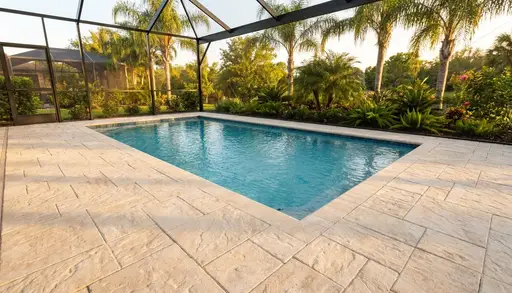
The best pool deck material for Florida is the one that stays coolest underfoot while holding traction when wet. Heat is the deciding factor for most Ocala homeowners — a beautiful deck nobody can cross barefoot in August is a failed deck. Color matters as much as material: lighter tones reflect more sunlight and consistently read cooler than dark ones in the same product line.
Textured Concrete Coatings (Knockdown, Spray Texture)
The most common and most affordable choice in Central Florida, typically in the $6 to $9 per square foot range. A textured acrylic-cement surface stays meaningfully cooler than bare gray concrete, offers good wet traction, and comes in a wide color range. It's the workhorse option for a reason.
Pavers
Concrete pavers generally run $10 to $18 per square foot installed. They're popular around The Villages and Belleview because individual pavers can be lifted and reset if a section settles, and light-colored paver blends stay reasonably comfortable in full sun.
Travertine
Natural travertine is the premium option, often $14 to $22 per square foot. Its appeal in Florida is genuinely functional as well as aesthetic: the stone is naturally porous and stays cooler than most alternatives, which is why it shows up so often around high-end Central Florida pools.
Stamped and Stained Concrete
A decorative middle ground, usually $8 to $14 per square foot. It offers the widest design flexibility of the group. The tradeoff is heat — darker stains and stone-look colors can get uncomfortably hot in direct Florida sun, so color selection deserves real thought.
Which Deck Surfaces Last Longest in Florida Weather?
In Central Florida's combination of UV exposure, humidity, and chlorinated splash-out, hard materials outlast coatings. Pavers and travertine commonly stay serviceable for 20 years or more with cleaning and occasional resetting, while acrylic and cement-based coatings typically deliver 8 to 12 years before they want to be refreshed. Manufacturers publish their own expected service life and maintenance requirements, and those figures are worth reading before you commit.
Three Florida-specific factors shorten any deck's life more than the material choice does:
- Standing water — decks that don't drain properly after summer storms stay wet, which promotes staining, algae, and surface breakdown regardless of what's on top.
- Chemical splash-out — concentrated pool chemistry that repeatedly lands in the same place will etch and discolor most surfaces over the years.
- Sprinkler overspray — well water in Marion, Sumter, and Levy counties carries iron that leaves rust-colored staining on light decks. Redirecting a single sprinkler head is one of the cheapest deck-preserving moves a homeowner can make.
Resurface or Replace: How to Decide
Resurfacing makes sense when the existing slab is structurally sound and the problem is the wearing surface. Full replacement becomes the better value when the concrete itself has failed — significant settlement, cracks that run all the way through, or sections that move underfoot. Because tear-out and disposal add substantially to the cost, an accurate assessment of the slab is the most valuable part of any estimate you receive.
Questions worth asking before you sign anything:
- Is the existing slab sound enough to accept a new surface, and what did you look at to determine that?
- What's the expected service life of this specific product, and what does the manufacturer's warranty actually cover?
- How does this material perform for surface temperature and wet traction in full Florida sun?
- Does the scope include addressing drainage, or only the visible surface?
- Are you licensed and insured in Florida, and can you provide local references?
On permits: cosmetic deck resurfacing frequently doesn't require one, while structural replacement, changes to the deck footprint, or work involving the pool barrier often does. Requirements differ across Marion, Sumter, Lake, and Citrus counties, so confirm with your local building department — or with a licensed contractor who pulls permits in your jurisdiction routinely — before assuming either way.
Lucaya Pools has spent nearly 45 years combined working on Central Florida pools and decks, and the honest answer we give homeowners is that deck condition, not deck age, drives the recommendation. If you'd like a look at what your deck needs, our team handles pool refinishing and remodeling throughout Ocala, The Villages, and the surrounding counties. Call (352) 843-3644 or get in touch to schedule a walkthrough.
Frequently Asked Questions
How much does pool deck resurfacing cost in Ocala, FL?
Pool deck resurfacing in the Ocala area generally runs $6 to $15 per square foot depending on material, which puts a typical 600 to 800 square foot deck in the $4,000 to $12,000 range. Textured concrete coatings sit at the low end; pavers and travertine sit at the top. Existing deck condition and access can shift the total in either direction, so treat these as planning ranges rather than a quote.
What is the coolest pool deck surface for Florida sun?
Light-colored travertine and light paver blends are typically the coolest options underfoot, followed by textured acrylic-cement coatings in pale tones. Color matters as much as material — a light finish in any product line will read cooler than a dark one. Bare gray concrete is the hottest common surface and can exceed 130°F in unshaded Central Florida summer sun.
How often does a Florida pool deck need to be resurfaced?
Most Central Florida pool decks need surface attention every 8 to 15 years. Coated surfaces typically last 8 to 12 years before wanting a refresh, while pavers and travertine often stay serviceable 20 years or more with cleaning and occasional resetting. Drainage, sun exposure, and sprinkler overspray affect the timeline more than the calendar does.
Do I need a permit to resurface a pool deck in Marion County?
Purely cosmetic resurfacing often does not require a permit, while structural replacement, expanding the deck footprint, or any work affecting the pool safety barrier commonly does. Requirements vary across Marion, Sumter, Lake, and Citrus counties. Confirm with your county building department or a licensed Florida pool contractor before work begins.
Can you resurface a cracked pool deck?
It depends on the type of cracking. Fine surface cracks are common in Florida concrete and generally do not prevent resurfacing. Wide cracks, settled sections, or areas that move underfoot indicate a slab problem that should be evaluated first, because a new surface over an unstable slab will not hold up. A licensed contractor should assess the slab before quoting a surface.
This article is general educational information about pool ownership. It does not describe the methods, specifications, or warranties of Lucaya Pools. Construction and installation practices vary by site and follow the pool manufacturer's specifications.