



Key Takeaways
Layer your defenses: Combine four-sided fencing, ASTM-rated safety covers, and UL-listed pool alarms to create multiple barriers against unsupervised access.
Supervision is non-negotiable: Assign a dedicated water watcher at all times—no phones, no alcohol—and rotate every 15–20 minutes during gatherings.
Swim lessons save lives: Formal instruction for children aged 1–4 can reduce drowning risk by up to 88% when paired with constant supervision.
Be ready for emergencies: Maintain current CPR certification, keep rescue equipment within arm’s reach, and post a written emergency action plan by the pool.
Know your legal requirements: Compliance with local codes (such as Florida’s Residential Swimming Pool Safety Act for pools built after October 1, 2000) protects your family and reduces liability.
Maintain consistently: Routine inspections of gates, covers, alarms, and water chemistry keep safety features effective season after season.
Understanding Residential Pool Risks
Residential pools rank among the most dangerous features on any property, especially for children under five and non-swimmers. Unlike public facilities with lifeguards and strict protocols, a home pool relies entirely on the homeowners and their habits to prevent accidents.
The numbers are sobering. According to CDC data, drowning is the leading cause of unintentional injury death for children ages 1–4, with approximately 4,000 drowning incidents occurring annually in the United States. A significant portion of these happen in residential pools, often within feet of supervising adults.
What makes pool-related injury so insidious is how quickly and silently it happens. A child can slip underwater and lose consciousness in under 30 seconds. There’s rarely splashing or screaming—the visual cues most people expect simply don’t exist. Common risk scenarios include:
Unsupervised access through a back door when adults assume someone else is watching
Parties where “everyone and no one” is watching as guests socialize
Toys left near the water that attract curious toddlers
Older children supervising younger siblings without adult backup
These realities underscore why a single safety measure—whether a fence, an alarm, or a watchful parent—is never enough on its own. The concept of “layers of protection” serves as the framework for everything that follows. Each layer compensates for potential failures in the others, dramatically reducing the risk of accidental drownings.
Physical Barriers and Access Control
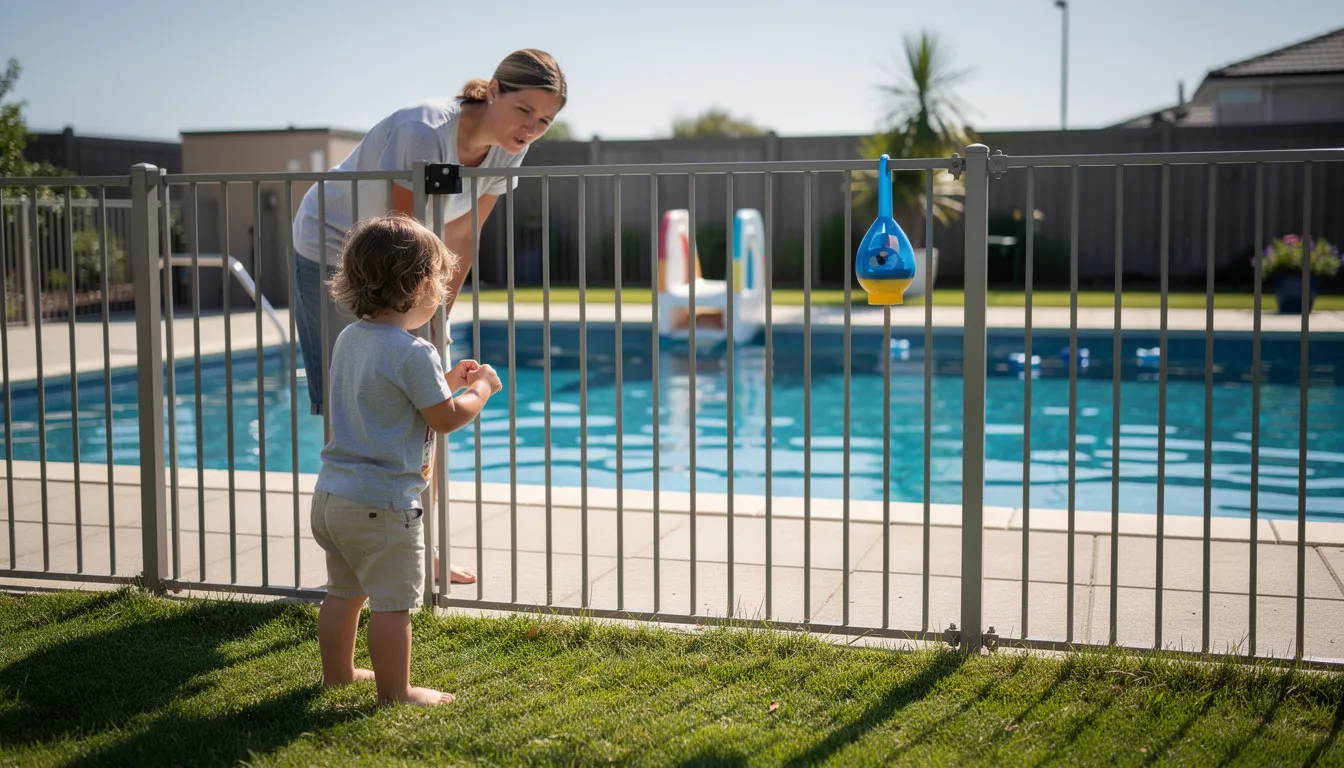
Physical barriers form the first and most critical layer of defense against unsupervised pool access. They work around the clock, whether you’re home or away, awake or asleep.
Many building codes and insurance policies require specific barrier features—minimum heights, maximum gap sizes, and particular gate designs. This section breaks down the three main components: pool fences, safety covers, and access alarms. While we’ll provide commonly accepted standards, always verify your local residential swimming pool regulations before installation.
Pool Fences and Gates
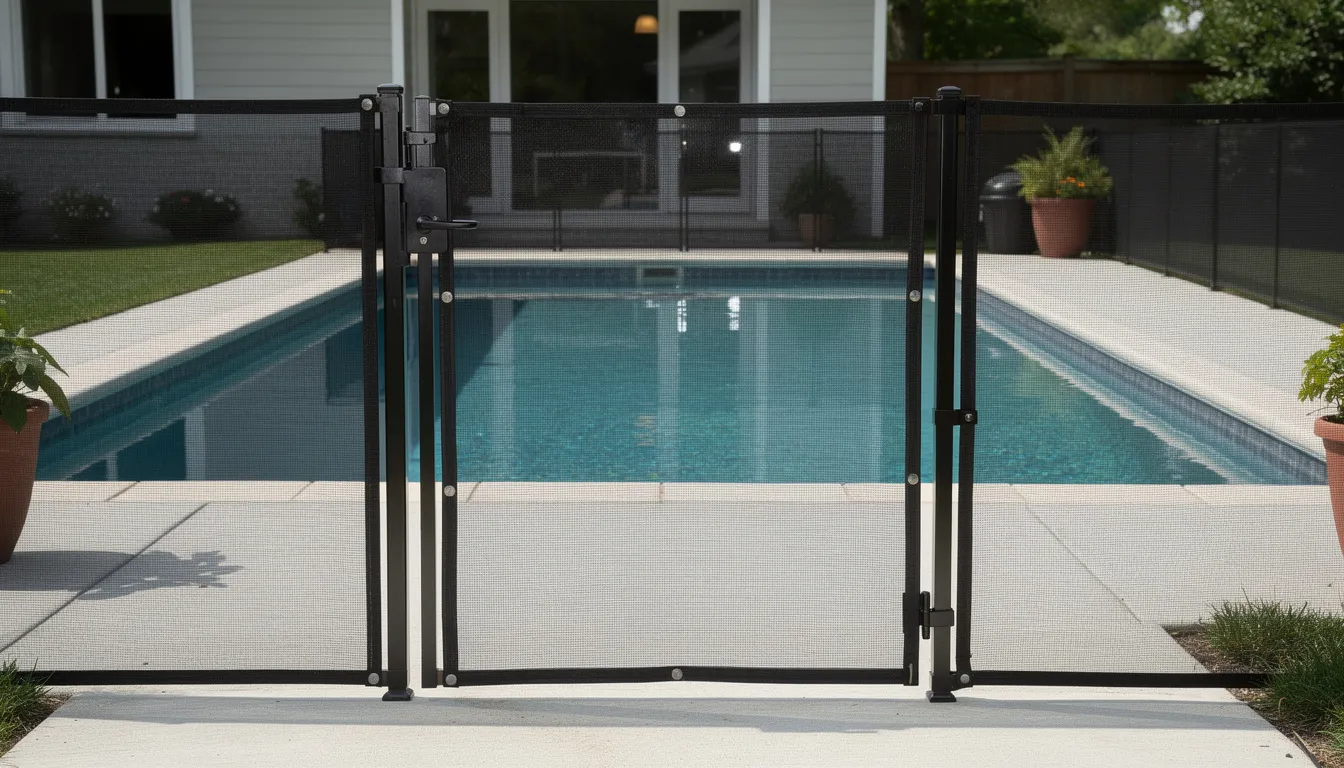
A pool fence should create complete isolation between your pool area and the rest of your property. Four-sided fencing—which fully separates the pool from your home and yard—outperforms three-sided fencing that uses the house as one barrier. Why? Homes have doors, windows, and other potential access points that children can exploit.
Dimensional requirements for effective fencing:
| Feature | Minimum Standard |
|---|---|
| Fence height | At least 4 feet (5 feet recommended) |
| Picket spacing | No more than 4 inches between vertical bars |
| Ground clearance | Less than 2 inches on hard surfaces |
| Gate latch height | At least 54 inches above ground |
Gates require special attention. Every gate to the pool area should be:
Self closing: Returns to the closed position automatically after opening
Self latching: Locks without manual intervention
Outward-opening: Opens away from the pool, preventing a child from pushing through
The latch mechanism should sit at least 54 inches above ground or include child-resistant hardware that requires adult-level dexterity to operate. Look for closing and self latching mechanisms with no openings greater than ½ inch within 18 inches of the release to prevent children from reaching through.
Common fencing materials:
Mesh fencing: Transparent, removable, affordable; ideal for temporary barriers
Aluminum: Durable, low-maintenance, available in various styles
Vinyl: Weather-resistant, won’t rust or corrode
Tempered glass: Maximum visibility, premium appearance, higher cost
Schedule routine inspections at least monthly. Check for rusted hardware, loose posts, and any landscaping near fences that creates climbable footholds. Bushes, chairs, or decorative features within 4 feet of the fence interior or 7 feet outside can help a determined child climb over.
Pool Safety Covers and Nets
A safety cover acts as a secondary barrier—not a substitute for fencing—and must meet ASTM F1346 standards to earn the “safety” designation. Standard winter tarps and solar covers don’t qualify; they can actually trap a child underneath.
Types of safety covers:
| Type | Description | Pros | Cons |
|---|---|---|---|
| Automatic slatted/vinyl | Motor-driven, deploys at the push of a button | Convenient, quick deployment | Expensive, requires professional maintenance |
| Manual mesh | Anchored to the deck, stretched and secured by hand | Affordable, allows water drainage | Labor-intensive to apply |
| Safety nets | Tensioned nets across the pool surface | Good visibility, lighter weight | Requires proper tensioning |
A properly rated safety cover should support at least 485 pounds—roughly the weight of one adult and one child—to prevent submersion if someone walks onto it. When in use, covers must be:
Fully extended with no gaps at the edges
Anchored securely at all points
Free of standing water exceeding 2.5 inches (which creates its own drowning risk)
Clear of debris that adds weight
Maintenance matters. Inspect covers seasonally for tears, worn straps, degraded anchors, and motor issues on automatic systems. A cover that fails when you need it offers no protection at all.
Doors, Windows, and Pool Alarms
Pool alarms provide an additional alert layer, not a replacement for fences or supervision. Think of them as a backup system that notifies you when barriers have been breached.
Types of pool alarms:
Surface wave alarms: Detect disturbances on the water surface
Subsurface pressure sensors: Monitor changes in water pressure below the surface
Wearable child alarms: Sound when a bracelet or anklet contacts water
Door alarms: Alert when doors leading to the pool area open
When selecting door alarms or in-pool devices, look for these features:
UL 2017 listing for pool alarms
Sound output of 85 decibels or higher (audible from inside the home)
Adjustable sensitivity to reduce false alarms from wind, rain, or pets
Best practice for homes with direct access to the pool: Install alarms on any door or window that opens to the pool area, plus at least one in-pool device. Many jurisdictions, including provisions under Florida law, accept approved alarms as one of the required safety measures for residential pools.
Test alarms monthly and replace batteries on a predictable schedule—many families use Daylight Saving Time changes as a reminder. An alarm with dead batteries offers zero protection.
Active Supervision and Safe Use Practices
No device—however sophisticated—replaces a focused adult. Supervision is the constant layer that runs across all other protections, active whenever anyone is in or near the pool.
What counts as supervision? Eyes on the water, body close by, and zero distractions. That means no texting, no reading, no stepping away to flip burgers on the grill. If you can’t see the pool, you’re not supervising.
Supervision Strategies and “Arms Reach” Safety
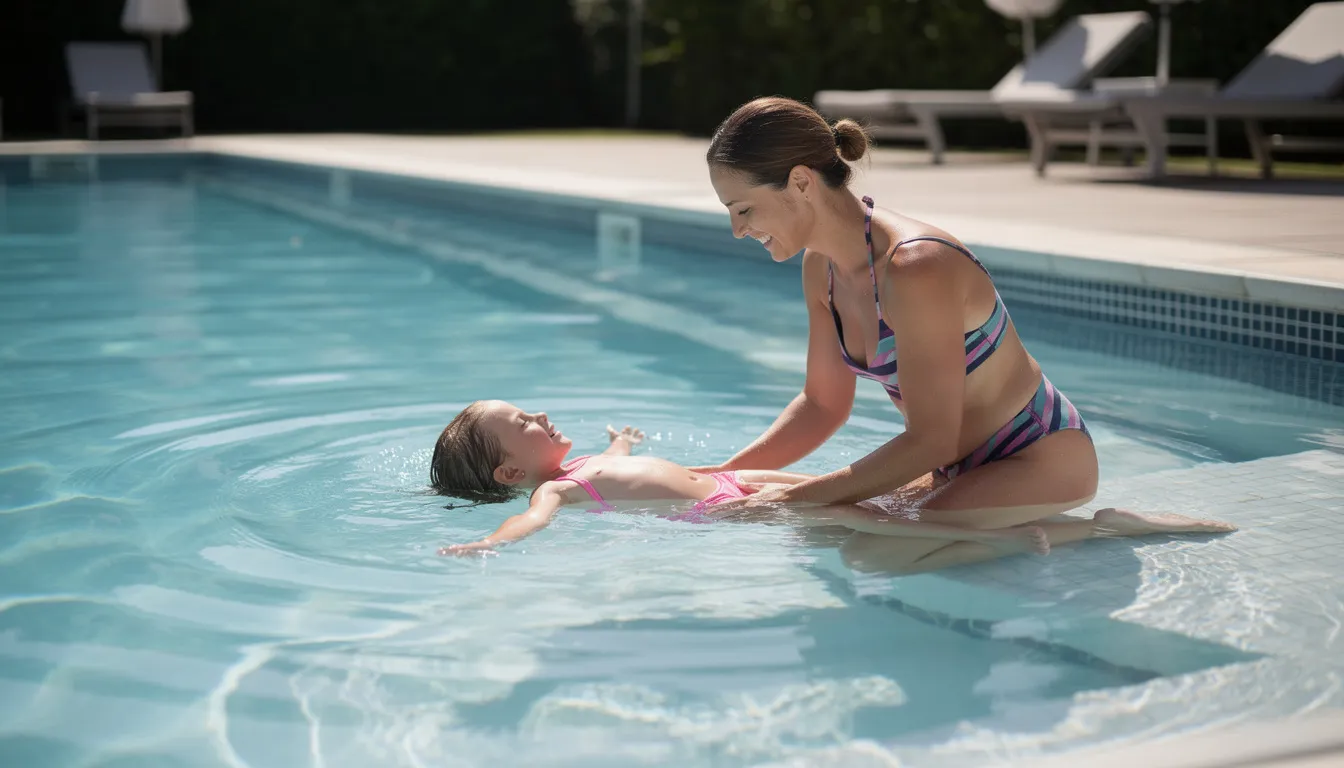
For infants and toddlers, use “touch supervision.” This means staying within arm’s reach of any child under five whenever they’re in the water or even on the pool steps. If you can’t grab them instantly, you’re too far away.
The arm’s length rule extends to how you position yourself. Don’t sit in a lounge chair across the deck—stand or sit at the water’s edge where you can intervene in one second.
The Water Watcher Approach:
During parties or gatherings, assign a designated water watcher—a sober adult whose only job is monitoring the pool. Rotate this responsibility every 15–20 minutes to maintain focus. Some families use a visible tag, lanyard, or bright armband to identify the current watcher.
The Buddy System:
For older children and teens, implement the buddy system. No one swims alone, and each swimmer is responsible for keeping track of their partner. If one buddy needs to leave, both leave.
Important supervision ratios:
| Swimmer Type | Recommended Ratio |
|---|---|
| Non-swimmers under 5 | 1 adult per 1–2 children |
| Beginning swimmers | 1 adult per 3–4 children |
| Competent swimmers | 1 adult supervising the group |
Resist the temptation to assign older siblings as primary supervisors. Close supervision requires adult judgment, swimming ability, and the authority to enforce rules. Teens can assist, but an adult should always maintain ultimate responsibility.
Household Pool Rules and Safe Behavior
Establish written household pool rules and post them visibly near the pool on a weather-resistant sign. Rules work better when everyone knows them—including guests.
Essential pool rules for families:
No solo swimming—ever
No running on the deck
No diving into shallow areas (under 9 feet deep)
No pushing, dunking, or rough play
No breath-holding games or contests
No glass containers in the pool area
Alcohol policy:
This one’s non-negotiable. Adults on supervision duty should not drink—period. Intoxicated guests should stay out of the water entirely. Alcohol is a factor in approximately 70% of adult drowning incidents.
Toy and float management:
Remove toys from the pool and pool area after each use (they attract curious children)
Limit large inflatables that block sightlines
Never use inflatable toys as substitutes for U.S. Coast Guard-approved life jackets
Avoid mermaid tails and similar items that restrict leg movement
Revisit these rules at the start of each swimming season and before any pool party. Involving children in the discussion—explaining why each rule exists—boosts their buy-in and compliance.
Swimming Skills and Water Safety Education
Strong swimming skills and a clear understanding of water safety significantly lower drowning risk. However, they don’t eliminate it. Even competitive swimmers can drown in the wrong circumstances, which is why skills complement—but never replace—barriers and supervision.
Age-Appropriate Swim Lessons
Formal swim lessons for children ages 1–4 can reduce drowning risk by up to 88% when combined with supervision and barriers. That statistic alone makes lessons one of the highest-value investments in drowning prevention.
Lesson progression by age:
| Age Group | Focus Areas |
|---|---|
| 6–12 months | Parent-and-child classes; comfort in water, not independent swimming |
| 1–4 years | Floating on the back, turning to the wall, short independent swims |
| 5–12 years | Treading water for 1+ minute, swimming 25 yards, basic rescue skills |
| Teens/Adults | Stroke refinement, endurance, lifesaving techniques |
When selecting a program, verify instructor credentials from recognized organizations (Red Cross, YMCA, or equivalent) and look for small class sizes that allow individualized attention.
One critical warning: Even skilled young swimmers require close supervision. No child is “drown-proof,” and overconfidence—in the child or the parent—creates dangerous gaps in protection.
Adults who cannot swim confidently should also seek lessons before using the deep end or taking on supervision duties. You can’t rescue someone if you can’t save yourself.
Teaching Everyday Water Safety at Home
Beyond formal lessons, families should hold brief, regular conversations about pool safety. Teaching children the “why” behind rules helps them internalize safe behaviors.
Home-based water safety education:
Use age-appropriate storybooks and videos about pool safety
Practice simple drills: grabbing the wall, calling for help, floating on the back
Teach children never to enter the pool area without an adult
Explain that they should never attempt to rescue someone themselves—instead, yell for help and throw a flotation device
Model safe behaviors consistently. Children learn more from what you do than what you say. Walk on wet surfaces. Use the steps or ladder. Follow every rule you’ve posted.
Reinforce these messages at the start of every pool session, especially when visiting children are present. Kids from homes without pools may have no frame of reference for pool dangers.
Emergency Preparedness and Response
Preparedness transforms a potential tragedy into a survivable event. In aquatic emergencies, seconds matter—brain damage begins within 4–6 minutes without oxygen. Having the right training, equipment, and plan in place can mean the difference between recovery and catastrophe.
CPR, First Aid, and Rescue Skills
At least one adult in your household—preferably everyone who supervises swimmers—should maintain current CPR certification. Organizations like the Red Cross and American Heart Association offer courses specifically designed for lay rescuers.
CPR training essentials:
Learn CPR techniques for infants, children, and adults (they differ significantly)
Schedule recertification every 1–2 years
Practice on manikins when possible to maintain muscle memory
Train frequent pool users: grandparents, nannies, babysitters
Data from the Red Cross shows that CPR initiated within 3 minutes enables a 46% survival rate for drowning victims. Every minute of delay reduces those odds dramatically.
When someone is struggling in the water, remember: “Reach or throw, don’t go.” Untrained rescuers who jump in often become additional victims. Use a pole, rope, or flotation device whenever possible.
Rescue Equipment and Emergency Action Plan
Emergency equipment should be mounted or stored within arm’s length of the pool—not in a garage or shed.
Essential rescue equipment:
| Item | Purpose |
|---|---|
| Life ring with rope | Throw to victim; pull them to safety |
| Reaching pole (shepherd’s crook) | Extend to victim from pool edge |
| First aid kit (waterproof) | Treat cuts, scrapes, and minor injuries |
| Charged phone | Call 911 immediately |
Create a written emergency action plan and post it near the pool. Everyone who uses your pool should know:
Who calls 911 (include your exact street address on the plan)
Who begins CPR while waiting for help
Who directs responders to the pool gate
Post local emergency numbers prominently. Guests and caregivers may not know your address or have it memorized under stress.
Run brief practice drills once or twice per season. Walk through the plan, locate equipment, and rehearse each person’s role. In an actual emergency, practiced responses happen automatically.
Safe Pool Environment, Equipment, and Water Quality
Many pool injuries stem from hazards beyond drowning: slips on wet decks, cuts from corroded ladders, entrapment in drains, or illness from unbalanced water chemistry. A safe swimming environment addresses all these risks.
Deck, Ladders, and Pool Equipment Safety
Slip-resistant surfacing prevents the most common pool injuries. Options include:
Textured concrete or aggregate finishes
Interlocking pavers with non-slip surfaces
Rubberized deck coatings
Anti-slip treatments for older, smooth decks
Inspect ladders, handrails, slides, diving boards, and drain covers regularly for:
Corrosion and rust
Loose bolts or missing fasteners
Cracks or structural damage
Sharp edges that could cause cuts
Drain safety deserves special attention. The Virginia Graeme Baker Pool & Spa Safety Act requires anti-entrapment drain covers in public pools, and pool owners should install them in residential pools as well. These specialized covers prevent hair, limbs, or clothing from being trapped by suction forces that can exceed 100 pounds.
Diving boards belong only in pools specifically designed for diving, with sufficient depth (typically 9+ feet) and clearance. Follow manufacturer guidelines precisely.
Keep the deck clear of clutter—hoses, furniture, toys—that can cause trips or block emergency access.
Electrical systems for pumps, lights, and heaters must be properly bonded and grounded. Schedule periodic inspection by a licensed electrician, especially for older pools.
Water Chemistry and Chemical Safety
Proper water balance protects swimmers from skin irritation, ear infections, and waterborne pathogens. Poor pool maintenance can turn your pool into a breeding ground for bacteria like cryptosporidium, which survives even chlorinated water.
Target ranges for pool chemistry:
| Parameter | Recommended Range |
|---|---|
| pH | 7.2–7.8 |
| Free chlorine | 1–3 ppm |
| Total alkalinity | 80–120 ppm |
| Calcium hardness | 200–400 ppm |
Test water at least 2–3 times per week during peak season using test strips or liquid kits. Document readings in a simple log to track trends.
Chemical handling safety:
Always add chemicals to water, never water to chemicals
Never mix different chemicals together
Wear eye protection and chemical-resistant gloves when dosing
Store chemicals in original containers, off the ground
Keep chemicals in a locked, dry, well-ventilated area away from children, pets, and heat sources
Improper chemical handling causes burns, toxic fumes, and even explosions. Treat pool chemicals with the same respect you’d give any hazardous material.
Regular Inspections, Maintenance, and Upgrades
Safety features only work when they’re maintained. A rusted gate latch, a torn cover, or a dead alarm battery can undo thousands of dollars in safety investments.
Weekly maintenance checklist:
Test all gate latches and self-closing mechanisms
Check pool alarm batteries and test activation
Inspect deck for slip hazards or damage
Test water chemistry and adjust as needed
Remove debris from pool and skimmer baskets
Monthly maintenance checklist:
Inspect fence for loose posts, rust, or climbable objects nearby
Check safety cover anchors and straps for wear
Test door alarms and window alarms
Inspect drain covers for damage or improper fit
Review emergency equipment (life ring, pole, first aid kit)
Seasonal maintenance checklist:
Professional inspection of pump, filter, and heater systems
Structural inspection of deck, coping, and pool shell
Safety cover deep cleaning and motor service (automatic covers)
Update emergency action plan with any new phone numbers or contacts
Older pools built before current codes may need significant upgrades to meet today’s safety standards. If your pool predates 2000, consider a professional safety audit to identify gaps.
Keep a written maintenance log posted in your equipment area. Checking off tasks ensures nothing gets missed—and provides documentation if questions arise later.
Legal and Insurance Considerations for Residential Pools
Residential pool safety extends beyond protecting your family—it encompasses legal responsibilities and insurance implications that pool owners must understand.
Regulatory requirements vary by jurisdiction, but common elements include:
Minimum barrier requirements (fencing, covers, or alarms)
Permit requirements for new construction or major modifications
Specific requirements for gate hardware and latch heights
Anti-entrapment drain cover mandates for certain pool types
In Florida, the Residential Swimming Pool Safety Act requires pools built after October 1, 2000, to include at least one approved safety feature: a fence, safety cover, door alarms, or pool alarm. Other states have similar legislation, and local codes may add further requirements.
Steps to ensure compliance:
Contact your local building department for current codes
Check with your homeowner association for additional restrictions
Verify that installed features meet referenced standards (ASTM, UL, etc.)
Obtain required permits before construction or modification
Insurance considerations:
Review your homeowners policy to confirm:
Liability coverage limits for pool-related incidents (commonly $100,000–$500,000)
Whether certain safety features are required for coverage
Exclusions that might apply to trampolines, diving boards, or slides
Umbrella policy options for additional protection
Document all safety upgrades, inspections, and repairs with photos, receipts, and dated records. This documentation proves valuable during permit inspections, insurance claims, and any legal proceedings.
Bringing It All Together: Building a Layered Safety Plan
Pool safety isn’t about any single device or rule—it’s about building redundant layers that compensate for inevitable human error and equipment failure.
Your layers of protection include:
Physical barriers (fences, gates, covers) to prevent unsupervised access
Alarms to alert you when barriers are breached
Active supervision by designated, sober adults
Swimming skills developed through formal lessons
Emergency preparedness with trained responders and ready equipment
Consistent maintenance to keep all systems functional
Walk through your property this week with this article as a checklist. For each layer, ask: “If this fails, what catches the problem?”
Start with quick wins:
Post written pool rules today
Test your alarms and replace batteries
Verify your emergency equipment is poolside and accessible
Assign a water watcher for your next pool session
Plan larger projects:
Schedule fence installation or upgrades
Order an ASTM-rated safety cover
Enroll family members in CPR certification
Book a professional safety inspection
Consistent habits matter as much as equipment. Lock gates every time. Deploy covers after every swim. Remove toys that attract curious children. These small actions, repeated daily, prevent the split-second lapses that lead to tragedy.
Don’t wait for swim season to think about safety. Review your protections now, make your upgrades before the weather warms, and ensure everyone in your household understands their role in keeping your pool a place of fun rather than tragedy. Your family’s safety—and the safety of every child who visits your backyard pool—depends on the decisions you make today.