




How Robotic Pool Cleaners Work in a Residential Setting
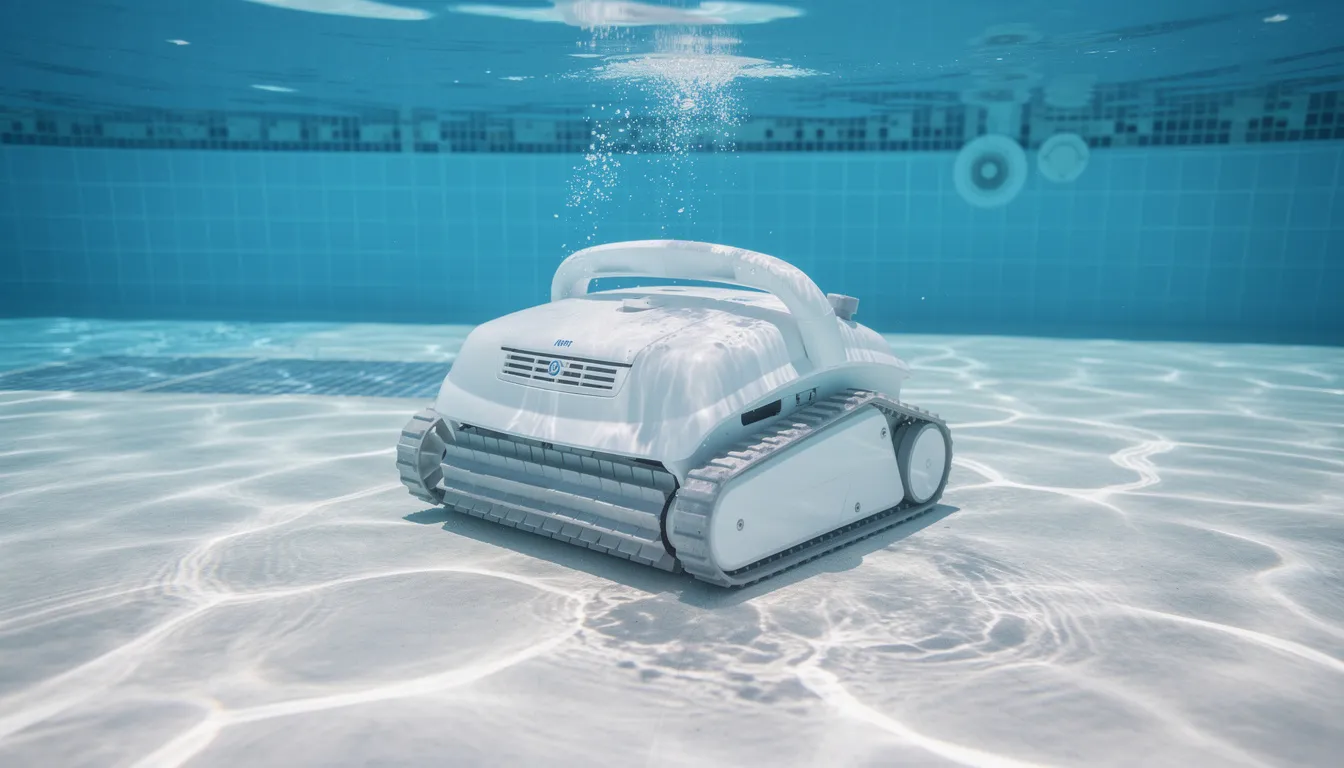
A robotic pool cleaner is a self-contained, low-voltage appliance that vacuums debris and scrubs pool surfaces independently of your main pump and filtration system. Unlike suction-side or pressure-side cleaners that rely on your pool’s existing plumbing, these robots operate on 24-30 volts DC power from a transformer plugged into a standard GFCI outlet. This separation means your pool robot handles the dirty work while your main filter stays cleaner longer.
Modern robots navigate your pool using sophisticated technology that has evolved dramatically since the early 2000s:
Gyroscopic sensors detect orientation and help the robot maintain efficient cleaning paths rather than random wandering
SmartNav-style mapping in premium models scans pool geometry to create a digital map, ensuring comprehensive coverage of irregular shapes
Internal pumps circulate thousands of gallons per hour, drawing water and debris through an oversized intake while discharging clean water upward
Traction systems using belts, tracks, or wheels propel the unit across vinyl, fiberglass, or concrete surfaces with wall climbing capabilities on advanced models
Typical cycle times range from 60 to 180 minutes depending on pool size and cleaning mode selected. A standard 12 × 24 ft residential pool generally completes in about 90 minutes, while larger 16 × 32 ft pools may run closer to two hours. Full pool coverage models clean the floor, climb walls, and scrub the waterline where algae and sunscreen residue accumulate most persistently.
Most pool owners with inground pools still choose corded robots for daily or weekly cleaning. The continuous power supply allows stronger motors, better suction, and reliable automation through weekly timers—advantages that battery-powered cordless units haven’t matched yet for thorough cleaning of larger residential pools.
Buying Guide: Choosing a Robot for Your Home Pool
Selecting the right robotic cleaner for your own pool doesn’t require technical expertise, but a few key decisions will determine whether you end up with years of trouble-free operation or buyer’s remorse. This practical checklist covers the factors that matter most for first-time buyers of residential robotic cleaners.
Pool Type and Size
Determine whether you have an inground or above ground pool—some robots are designed specifically for one or the other
Measure your pool’s longest dimension; entry-level models typically handle up to 33 ft, mid-range units reach 40 ft, and commercial platform designs cover 50 ft pools
Freeform or complex shapes benefit from robots with advanced navigation and smart mapping rather than random-pattern models
Surface Material
Plaster, vinyl, fiberglass, and tile all require different brush types for effective scrubbing without damage
Rubber brushes work well on tile and fiberglass; combination bristle/rubber brushes suit textite and pebble finishes
Confirm manufacturer compatibility before purchasing to protect your pool surfaces
Debris Profile
Heavy leaf loads call for models with an oversized leaf bag and cyclonic separation technology
Fine dust, pollen, and sand require ultra-fine filtration like nanofilter panels or nanofilter set cartridges
Algae-prone pools benefit from powerful scrubbing brushes that spin independently of the drive system
Budget Ranges (2025-2026 Pricing)
Under $600 → Entry-level models with floor cleaning capabilities, basic filtration, manual start required
$600–$1,000 → Mid-range robots with wall climbing, smart timers, and improved filter options
$1,000–$1,800 → High-end residential units with commercial grade motors, full coverage, and app connectivity
$2,000+ → Commercial platform robots adapted for large or demanding residential pools
Brand Reputation
Trusted names like Dolphin (Maytronics) and Aquabot have established North American service networks and readily available replacement parts
Numerous newer imports have flooded the market since 2020; many lack long-term reliability data or adequate warranty support
Prioritize brands with at least 2-3 year warranties and documented parts availability before committing to a purchase
Corded vs Cordless Robots for Residential Pools
Interest in cordless robotic cleaners has grown significantly as pool owners seek simpler setups and cleaner pool decks. However, corded models remain the safer, stronger choice for most homeowners with inground pools in 2025-2026.
Strengths of Corded Cleaners
Continuous power supply enables commercial-grade motors that filter 4,000+ gallons per hour without interruption
Longer cleaning cycles (up to 3 hours) ensure thorough cleaning of large pools in a single session
Stronger suction maintains consistent performance on walls and waterlines where debris clings stubbornly
Weekly smart timers allow true set-and-forget operation with scheduled runs every 24-72 hours
Swivel cord technology (up to 60 ft) prevents tangling in most residential pools
Current Drawbacks of Cordless Robots
Weaker motors and pumps result in reduced suction compared to corded counterparts
Battery life typically limits runtime to 60-90 minutes, insufficient for many mid-size to large pools
Daily charging requirements add maintenance steps that corded robots eliminate
Limited wall climbing capabilities and waterline cleaning in larger residential pools
Higher long-term costs from battery replacement every 2-3 years
Safety Considerations
The 2023-2024 period saw lithium-ion battery recalls affecting several cordless pool cleaning devices, including certain Aiper units. These recalls highlighted risks of thermal events and fires when batteries are stored improperly or charged near pool areas. For families with children and pets, the proven safety record of low-voltage corded transformers offers peace of mind that emerging cordless technology hasn’t yet matched.
Recommendation
For most households with inground pools, corded robots are the recommended choice through at least 2026. Cordless models may suit small pools (under 15 ft diameter) or simple above-ground setups where runtime limitations aren’t problematic and the convenience of no cord outweighs reduced cleaning power.
Key Features Homeowners Should Look For
Not all robotic cleaners deliver the same ownership experience. Certain features dramatically improve day-to-day convenience and long-term value, while others are marketing fluff that adds cost without benefit. Here’s what actually matters for residential pool owners.
Suction Power and Motor Quality
Commercial-grade motors in $1,200+ robots filter 4,000-4,500+ gallons per hour versus 2,500-3,000 in budget models
Dual-motor designs separate drive and pump functions for more efficient operation
DC brushless motors run quieter and last longer than older AC motor designs
Stronger suction maintains performance on vertical walls and steep deep-end slopes
Filtration Quality
Simple plastic mesh filters catch leaves but miss fine particles that cloud water
Standard cartridges capture debris down to approximately 50 microns
Ultra-fine nanofilter panels or nanofilter set baskets trap particles as small as 2 microns, including pollen, algae spores, and fine sand
Full Pool Coverage
Floor-only robots leave walls and waterlines untouched, allowing algae and grime to accumulate
Wall climbing capabilities require adequate traction systems (tracks or specialized wheels)
Waterline cleaning addresses the scum line where 70% of algae hotspots develop
Look for models explicitly rated for floor, walls, and waterline for comprehensive coverage
Automation Features
Weekly timers eliminate manual start for each cycle
App-based scheduling via Wi Fi or Bluetooth enables remote scheduling and monitoring
Programmable modes let you select floor-only, walls plus waterline, or intensive clean cycles
Filter full indicators prevent running with clogged baskets that reduce suction
Practical Usability
Top-loading baskets lift out easily for quick rinsing; bottom-loading bags are harder to access
Tangle-free swivel cords (50-60 ft) prevent frustrating knots during operation
Carrying caddies help older owners transport the robot without straining
Lightweight designs under 20 lbs simplify retrieval from the water
Warranty and Parts
2-year warranties are standard; 3-year coverage on premium models like Dolphin Premier indicates manufacturer confidence
Check parts availability before purchase—tracks, brushes, and filters need periodic replacement
Annual replacement parts typically cost $50-150 for quality robots; budget imports may lack replacement parts entirely
Weekly Smart Timers and App Scheduling
Weekly timers transform robotic pool cleaning from a manual chore into true set-and-forget automation. Owners press a button once, and the robot runs every 24, 48, or 72 hours without further intervention throughout the swim season.
Specific scheduling options on 2024-2025 models include:
Daily cleaning for heavy-use pools or those surrounded by trees shedding large debris
Every-other-day cycles that balance thorough cleaning with reduced wear on components
Every-third-day schedules suitable for covered pools or those with minimal debris loads
Time-of-day settings that run the robot overnight or early morning before swimmers arrive
Premium robots like Dolphin Sigma and Dolphin Nautilus CC Plus Wi-Fi offer smartphone app control through applications like myDolphin Plus. These apps enable remote start from anywhere, custom schedule creation by specific days and times, and real-time notifications when cleaning completes or filters need attention.
Entry-level units under approximately $600 typically lack smart timers and app connectivity, requiring manual start for each cleaning cycle. For busy families, the convenience of automation often justifies the step up to mid-range models with these features built in.
Advanced Filtration for Sparkling Water
Capturing leaves and twigs is only part of the filtration challenge. Fine particles—sand tracked in from the beach, pollen from nearby trees, dust from construction, and microscopic algae spores—cloud residential pool water and strain main filter systems. Advanced robotic filtration addresses debris at multiple scales.
Multi-Stage Filter Systems
Large debris baskets or oversized leaf bag compartments catch leaves, acorns, and twigs before they clog finer filters
Standard cartridges handle medium debris and capture particles down to 50 microns
Ultra-fine nanofilter panels or nanofilter set inserts trap microscopic particles as small as 2 microns
Real-World Examples
Dolphin Premier includes multi-media filtration with an oversized leaf bag plus fine and ultra-fine cartridge options
Dolphin Quantum features an XXL MaxBin-style basket with included ultra-fine filtration for high-capacity debris collection
Blue Helix models use dual filter baskets that handle both large debris and small debris simultaneously
Ease of Maintenance
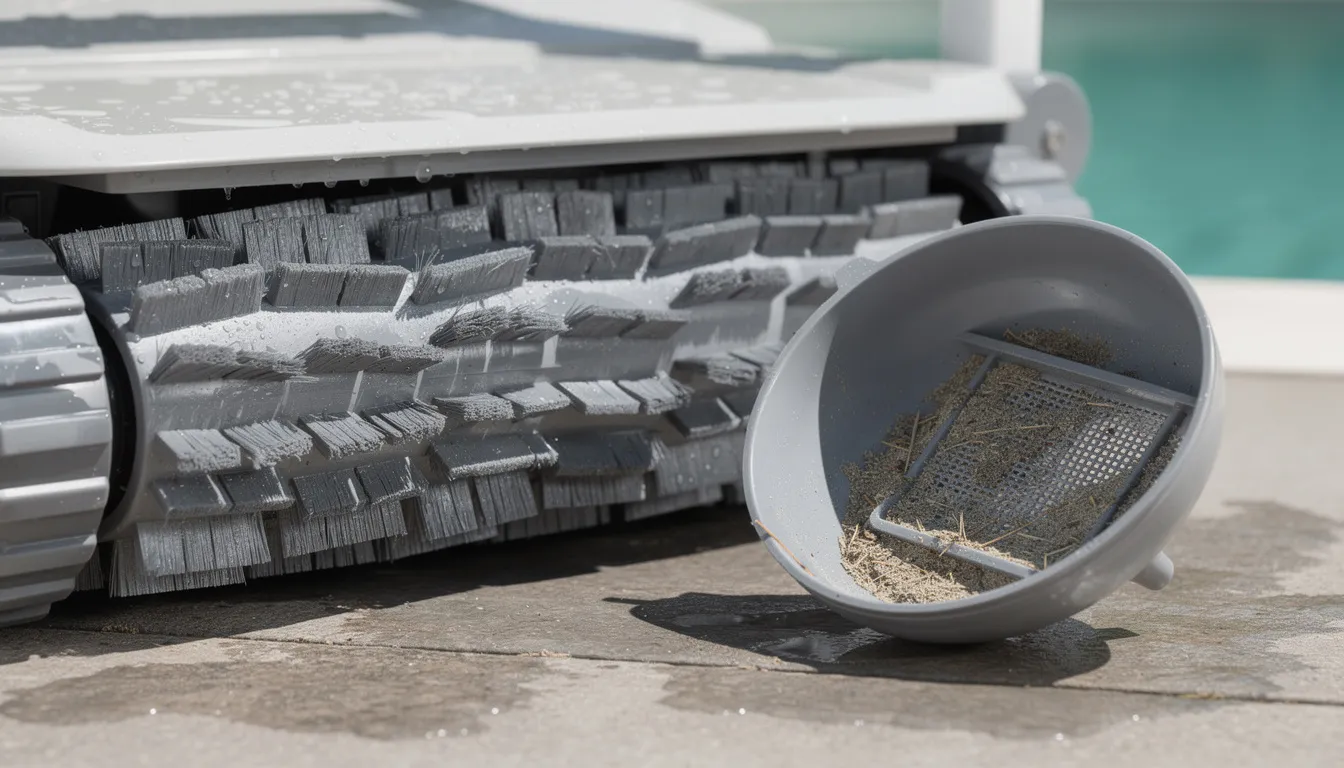
Top-access baskets lift out with one hand and rinse clean in seconds with a garden hose
Older bag-style systems require more effort to empty and clean thoroughly
Filter-full indicators on premium models alert you before clogged filters reduce suction
The visibility benefit of advanced filtration extends beyond the robot itself. Clearer water means less strain on your main filtration system, fewer shock treatments across the season, and reduced chemical consumption as the robot proactively removes debris before it decays.
Commercial-Grade Motors and Build Quality
When manufacturers describe a robotic cleaner as built on a “commercial platform,” they’re referring to industrial-strength components designed for thousands of hours of continuous operation in commercial pools, hotel properties, and municipal facilities.
What Commercial-Grade Means
Multiple high-efficiency DC motors dedicated to separate functions (drive, pump, brush rotation)
Heavy-duty tracks or wheel systems that maintain traction on steep slopes and rough surfaces
Durable housings rated for UV exposure and chemical resistance over many seasons
Internal components tested for 3,000+ hours of operation before failure
Performance Benefits
Stronger climbing ability on deep-end walls and tight corners
Capacity to push more water through dense ultra-fine filters without losing suction
Consistent performance across long pool seasons (May through October in most regions)
Better handling of heavy debris loads without motor strain
Models Built on Commercial Platforms
Dolphin Premier ($1,500-$2,000)
Dolphin Sigma ($1,800-$2,200)
Dolphin Quantum ($1,200-$1,500)
Serious swimmers and households with large 40-50 ft pools often see better long-term value from these models. While upfront cost is higher, the extended lifespan and reduced repair frequency typically offset the price difference compared to replacing cheaper imports every 2-3 years.
Full Pool Coverage: Floor, Walls, and Waterline
Many budget robots clean only the pool floor, which handles settled debris but leaves walls and waterlines untouched. In residential pools—especially plaster, tile, and fiberglass surfaces—this limitation allows algae, sunscreen residue, and body oils to accumulate at the waterline where they’re most visible and hardest to remove manually.
Why Full Coverage Matters
The waterline (also called the scum line) collects oils, lotions, and organic matter that feed algae growth
Vertical walls in the deep end rarely get manual brushing, becoming prime territory for green and black algae
Ignoring these areas increases chemical demand and requires periodic shock treatments to control algae blooms
Models Designed for Complete Cleaning
Dolphin Quantum climbs walls aggressively and scrubs the waterline automatically
Dolphin Premier uses PowerStream-style mobility to cling to vertical surfaces throughout its cycle
Dolphin Sigma combines wall climbing with waterline scrubbing and smart navigation
Practical Guideline
For most inground residential pools built after 2000, prioritize a full-coverage robot over floor-only units. The additional cost is typically $200-400, but the reduction in manual brushing and algae prevention easily justifies the investment over a single season.
Avoiding Fake Reviews and Low-Quality Imports
The robotic cleaner market exploded between 2020 and 2025 as residential pool ownership increased 15% and homeowners sought automation solutions. This growth attracted many new brands—some legitimate, many questionable—along with a surge in suspicious online reviews that make research frustrating for buyers.
Verifying Review Authenticity
Use browser tools like Mozilla’s Fakespot extension to analyze review patterns and detect manipulation
Look for detailed reviews with specific photos showing the robot in actual pools, not stock images
Check reviewer history—legitimate buyers review multiple product categories over time
Be skeptical of products with hundreds of 5-star reviews but few verified purchase indicators
Prioritizing Reputable Brands
Dolphin (Maytronics) has manufactured robotic cleaners since the 1990s with established North American service centers
Aquabot maintains similar longevity and parts availability for long-term ownership
Unknown brands with minimal online presence, no physical service locations, and vague warranty terms deserve extra scrutiny
Return Policies and Warranty Service
Some newer cordless brands have experienced safety recalls or very high failure rates in their first production years
Check return policies carefully—many sellers charge restocking fees of 15-25% on opened pool equipment
Confirm warranty service logistics before purchase: Will you need to ship the unit internationally for repairs?
User friendly warranty processes through authorized retailers often matter more than warranty length alone
The goal isn’t to avoid all newer brands, but to verify that adequate support exists before committing several hundred dollars to a product you’ll depend on for years.
Best Robotic Cleaners for Common Residential Pool Scenarios
Matching the right robot to your specific pool situation prevents both overspending on unnecessary features and underbuying a model that can’t handle your needs. This section provides curated recommendations for typical home pool scenarios in 2025-2026, with enough detail to shortlist options without overwhelming specification comparisons.
Best Overall for Most Homes: Dolphin Premier
Dolphin Premier stands as the flagship choice for standard residential inground pools up to approximately 50 ft, built on the proven commercial platform that Maytronics uses for hotel and fitness center installations.
Core Specifications
Dual commercial grade motors for separate drive and pump functions
Multi-media filtration system with oversized leaf bag, standard cartridge, and nanofilter set options
60 ft swivel cable prevents tangling in large pools
Weekly programmable timer with multiple schedule options
Homeowner-Focused Features
Full filter/media alert indicators prevent running with clogged baskets
Included caddy simplifies transport and storage
3-year warranty coverage reflects manufacturer confidence in durability
Investment Perspective
Typical pricing falls between $1,500-$2,000 depending on retailer and seasonal promotions. While this places Premier at the higher end of residential pricing, owners who maintain it properly report 8-10 years of reliable service. Compare this to replacing $600 budget robots every 2-3 years, and the long-term economics often favor the premium purchase.
Best Value for Residential Inground Pools: Dolphin Cayman
Dolphin Cayman delivers premium features at a lower cost, typically under $800, making it an excellent choice for families who want quality without flagship pricing.
Key Specifications
Dual motors with efficient power distribution
Weekly smart timer for automated scheduling
Wall-climbing ability with reliable traction on most surfaces
Top-loading MaxBin basket with optional nanofilter basket for finer debris
Cleaning Performance
Fast-spinning HyperBrush effectively scrubs algae off plaster and vinyl linings
Strong suction handles typical residential debris loads without struggling
Suitable for common backyard inground pools from 12 × 24 ft up to approximately 33-35 ft
Dolphin Cayman emphasizes dependable, straightforward operation over futuristic features. For families who want a robot that just works without requiring smartphone apps or complex programming, Cayman represents great value in its price segment.
Most High-Tech: Dolphin Sigma
Dolphin Sigma targets tech-oriented homeowners who want Wi Fi control, precise navigation, and integration with smart home ecosystems.
Advanced Technology
SmartNav 3.0-style gyroscopic navigation creates efficient cleaning patterns for irregular pool shapes
Smartphone app control through myDolphin Plus enables remote start, custom schedules, and status monitoring
Voice assistant integration (including Siri shortcuts) allows hands-free commands
Granular scheduling by specific days and times fits complex family routines
Performance Hardware
Triple-motor configuration provides exceptional suction and climbing power
Included nanofilter set captures ultra-fine particles for crystal-clear water
Commercial platform heritage ensures durability matching professional installations
Ownership Profile
With a 3-year warranty and pricing typically between $1,800-$2,200, Sigma suits larger or more complex inground pools including freeform designs. Busy families who want everything automated—schedule it once from your phone, forget about pool cleaning entirely—find Sigma’s smart connectivity worth the premium.
Best for Inground Residential Pools: Dolphin Quantum
Dolphin Quantum offers advanced performance at a more accessible price point than Premier or Sigma, making it ideal for owners who prioritize strong wall and waterline cleaning without paying top-tier prices.
Distinguishing Features
Dual motors moving over 65 gallons per minute through the filter system
XXL MaxBin basket handles heavy debris loads with less frequent emptying
Included ultra-fine nanofilter basket captures sand, pollen, and algae spores
PowerJet-style mobility helps it cling to vertical surfaces and scrub the waterline effectively
Navigation and Automation
SmartNav 2.0-type scanning ensures efficient coverage patterns
Weekly timer allows automated scheduling without smartphone requirements
Typically includes 2-year warranty with widely available replacement parts
Dolphin Quantum positions itself as the excellent choice for owners who want close to ProLine performance—the level found in Dolphin Premier—without paying flagship prices. For most inground residential pools under 50 ft, Quantum delivers more cleaning power than you’ll likely need.
Best for Above-Ground & Smaller Inground Pools: Dolphin Escape
Dolphin Escape addresses the specific needs of above-ground pools up to around 33 ft and small inground pools where full-size robots would be overkill.
Compact Design Features
HyperBrush dual scrubbing system spins faster than standard brushes for aggressive cleaning of vinyl liners
Largest filter capacity in its class—approximately 75% more than basic cartridges—handles heavy leaf loads
Quick-rinse top access simplifies maintenance for owners dealing with tree debris
Lightweight construction makes retrieval easy even from above-ground pool walls
Practical Considerations
While some versions lack smart timers, the trade-off is pricing commonly under $600. For above-ground pool owners upgrading from manual vacuums or simple suction cleaners, Escape represents a significant quality-of-life improvement without premium investment.
Other Notable Alternatives (Aquabot, Blue Helix, Nautilus CC Plus)
Beyond the core Dolphin ProLine models, several alternatives broaden options for different budgets and preferences.
Aquabot REVA offers gyroscopic navigation, dual-layer top-loading filters, and smartphone connectivity at a lower price point. It suits buyers prioritizing cost over maximum suction power, performing well in small to medium inground pools with moderate debris loads.
Blue Helix One packs three motors, dual oversized filter baskets, and focused cleaning modes (floor, walls, waterline) into a package often priced near $600. With app control and a 2-year warranty included, it delivers strong value for homeowners comfortable with newer brands.
Dolphin Nautilus CC Plus Wi-Fi remains one of the most widely tested and reviewed options in the mid-range segment. It can clean a typical residential pool in under two hours with strong suction, reliable app scheduling through myDolphin Plus, and the backing of Maytronics’ established service network.
Installation, Daily Use, and Maintenance Tips
Installing and operating a robotic pool cleaner is typically a DIY task that takes under 10 minutes, even for first-time owners. No plumbing modifications, professional installation, or technical expertise required.
Basic Setup Steps
Position the power supply at least 10 ft from the pool edge, protected from splashing and direct sun
Plug the transformer into a GFCI-protected outlet (required for safety)
Connect the floating cable to the power supply and the robot
Gently lower the robot into the shallow end, allowing air to escape as it sinks
Daily or Weekly Operation
Select cleaning mode (if applicable) or simply press the start button
Allow the full cycle to complete—typically 90-150 minutes for residential pools
Wait for the robot to surface and drain briefly, then remove using the built-in handle
Empty the filter basket and rinse with a garden hose
Maintenance Best Practices
Rinse filters after each heavy-debris cycle to maintain suction power
Clean nanofilter-style cartridges every 2-3 cycles for optimal fine particle capture
Inspect tracks and brushes monthly; replace when worn (typically annually for heavily used robots)
Store the power supply indoors or in a shaded, dry location to extend electronic component life
Coil the cable loosely to prevent kinks that can damage internal wiring
Safety Reminders
Never swim while the robot is running—low voltage is safe but not risk-free
Always unplug the power supply before handling the cleaner or reaching into the pool
Supervise children and pets around the power supply and floating cable
Remove the robot from the water during thunderstorms
Off-Season Care
When closing your pool for winter, drain all water from the robot’s pump housing, clean filters thoroughly, and store the unit indoors in a climate-controlled space. Freezing temperatures can crack pump housings and damage internal seals. Proper winter storage extends lifespan significantly.
How These Recommendations Are Formed
Credible guidance on robotic cleaners comes from long-term testing in real residential pools, not just unboxing videos or manufacturer spec sheets. Understanding how recommendations are developed helps you evaluate whether advice applies to your specific situation.
Evaluation Factors
Cleaning performance on both fine debris (sand, algae) and large debris (leaves, acorns, twigs)
Navigation efficiency and coverage patterns in various pool shapes
Cord tangling frequency during extended cleaning cycles
Ease of filter cleaning and basket accessibility
Reliability over multiple seasons of regular use
Warranty claim experiences and parts availability
Consistent Performers
Models like Dolphin Premier, Dolphin Cayman, Dolphin Sigma, Dolphin Quantum, and Dolphin Nautilus CC Plus Wi-Fi consistently perform well across independent tests, verified user reviews, and professional pool service feedback. These robots have years of field data supporting their performance claims.
Transparency in Recommendations
The best robotic pool cleaners earn their reputations through documented results, not marketing budgets. Be skeptical of reviews that rely heavily on manufacturer claims without real-world verification. Look for sources that disclose testing methodology and acknowledge both strengths and limitations of recommended products.
Final Thoughts: Is a Robotic Cleaner Worth It for Your Home Pool?
A quality robotic cleaner can cut manual vacuuming time to near zero and reduce strain on your pool’s main filtration system throughout the swim season. For most residential pools, these robots pay for themselves within 2-3 seasons through reduced chemical costs, extended filter life, and countless hours saved on maintenance.
Corded robots with strong motors, quality filtration, and weekly timers remain the safest long-term bet for 2025-2026, especially for inground pools where consistent suction power and automation matter most. Cordless technology continues improving but hasn’t yet matched the reliability and cleaning capabilities that corded models deliver.
Match your specific model choice to your pool size, surface type, debris profile, and budget using the buying guide and scenario-based recommendations above. A Dolphin Cayman handles most standard residential pools admirably; step up to Premier or Sigma if you have a larger pool, heavy debris loads, or simply want the best available technology.
A well-chosen robotic cleaner keeps your backyard pool swim-ready from spring through fall with minimal effort—freeing you to actually enjoy the water instead of constantly maintaining it.