



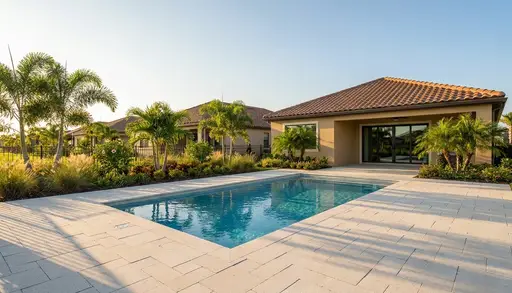
Key Takeaways
- Industry research generally puts resale cost recovery on an in-ground pool at roughly 50% to 65% — but Florida markets tend to sit at the higher end because the swim season runs year-round.
- In the Ocala and The Villages area, appraisers most often value a well-kept pool in the $20,000 to $50,000 range, depending on size, screen enclosure, decking, and condition.
- Condition matters more than age. A dated pool with a failing surface can read as a repair bill to buyers, while the same pool after a refinish reads as a feature.
- The strongest financial case for a pool in Central Florida is usually the combination of partial resale recovery plus 8 to 10 years of use, not resale value alone.
Does a Pool Add Value to a Home in Ocala, FL?
Yes — in Central Florida, a well-maintained in-ground pool usually adds measurable value to a home, though rarely the full amount it cost to build. Most industry studies put cost recovery somewhere between 50% and 65%, and Florida sits toward the upper end of that range because buyers here expect outdoor living and can swim nearly twelve months a year.
The national picture is more conservative than the Florida picture. The National Association of Realtors has reported cost recovery on an in-ground pool at roughly 55% to 60% in its remodeling and outdoor-features research — a figure that averages Minnesota and Maine in with Marion County. In markets where a pool is a seasonal luxury, it can be close to a wash. In Ocala, Belleview, and The Villages, where a screened pool is closer to a baseline expectation on mid- and upper-tier homes, the gap narrows considerably.
Two things drive that difference. First, demand: a large share of Central Florida buyers filter their home search for a pool, so a pool home draws more interested buyers and often moves faster. Second, replacement cost: a buyer comparing two similar Ocala homes knows that adding a pool to the one without it means months of planning and a five-figure project, and that known cost gets priced in.
How Much Value Does a Pool Add to a Central Florida Home?
In practical appraisal terms, a well-kept in-ground pool in the Ocala area typically contributes somewhere between $20,000 and $50,000 to a home's value. The wide range reflects real differences between properties — appraisers value the pool as an improvement in its current condition, not as a line item at what it originally cost.
The factors that move a pool's contributory value most:
- Screen enclosure or cage: Often the single biggest value multiplier in Florida. An enclosed pool means fewer leaves, less cleaning, and usable evenings during mosquito season.
- Surface and interior condition: A smooth, unstained surface signals a maintained pool. Rough plaster, hollow spots, or heavy staining signals a project.
- Deck size and material: A generous paver or resurfaced deck reads as living space. A narrow 3-foot concrete ribbon does not.
- Equipment age and efficiency: Variable-speed pumps, salt systems, and automation lower the operating cost a buyer inherits, so an old single-speed pump stands out as deferred spending.
- Proportion to the lot: A pool that leaves usable yard and shade adds more than one that consumes the entire back lot.
- Fit with the neighborhood: In a Sumter County subdivision where most comparable homes have pools, having one protects value. Where almost none do, the pool is a differentiator with a narrower buyer set.
Homeowners considering a new build should also weigh how the pool type affects long-term ownership cost, since that's what a future buyer is really buying. Our fiberglass pools and spas page covers the models available for Central Florida yards, and manufacturers such as Latham publish their own warranty terms and expected service life for their shells — worth reading directly when you compare options.
Why Florida Pools Hold Value Better Than Northern Markets
A pool in Marion County is used roughly three times as many months per year as a pool in the Midwest, and that utility shows up in what buyers will pay. Florida's climate turns a pool from a July amenity into part of how a household lives — which is why pool homes here command a more consistent premium.
The regional specifics that support Florida pool value:
- Season length: With a heater or heat pump, Central Florida pools are comfortable most of the year. Even unheated, the practical swim season commonly runs March through October.
- Retirement demand: The Villages and surrounding Sumter and Lake County communities draw active-adult buyers who value low-maintenance outdoor living. Smaller, easy-care pools do well with this group.
- Equestrian and acreage properties: On Ocala's larger lots, a pool anchors the outdoor space in a way that supports higher overall valuations.
Which Pool Upgrades Actually Increase Resale Value?
The upgrades that return the most at resale are the ones that reduce a buyer's future cost or expand usable outdoor living space. Cosmetic personalization returns the least. If your goal is value rather than pure enjoyment, prioritize condition and function over novelty.
Upgrades that tend to pay back
- Refinishing a tired surface: The clearest before-and-after in a buyer's mind. Refinishing generally costs a fraction of what a buyer would mentally deduct for a pool that needs work. Our pool refinishing and remodeling page outlines the surface options available for Florida pools.
- Deck resurfacing or expansion: Turning a cramped deck into a usable patio effectively adds square footage of living space.
- Screen enclosure repair or replacement: A torn cage is an immediate red flag; a tight one is a selling point.
- Variable-speed pump and modern filtration: Lower monthly operating cost is an easy figure for a buyer to appreciate.
- Salt chlorination conversion: Widely preferred by Florida buyers for water feel and simpler day-to-day chemical handling.
- LED lighting and simple automation: Relatively modest cost, strong impression during evening showings.
Upgrades that are about enjoyment, not return
- Elaborate rock waterfalls and highly stylized features, which are taste-specific.
- Oversized spas on small lots, where the footprint costs more yard than the feature returns.
- Very deep diving wells, which some Florida families with young children see as a drawback.
Build them if you want them — just build them for yourself, not for the appraisal.
When a Pool Can Hurt a Home's Value in Florida
A pool becomes a liability at resale when it looks like unfinished work. Buyers and their inspectors price visible problems aggressively, and a pool needing repair is often discounted by more than the actual cost of fixing it — because the buyer is pricing in uncertainty on top of the repair.
The situations that drag value down:
- Deferred maintenance: Stained or rough surfaces, failing tile lines, cloudy water at showings, and an equipment pad with rust and patch clamps.
- Missing safety compliance: Florida's Residential Swimming Pool Safety Act (Chapter 515, Florida Statutes) requires new residential pools to have at least one approved safety feature — a barrier at least four feet high with a self-closing, self-latching gate, approved door or window alarms, or an approved power safety cover. Gaps here can complicate a sale.
- Undocumented work: Additions or modifications without the permits and closeout records a title or insurance review would expect.
- Lot mismatch: A pool that eliminates all yard space on a family-oriented street narrows the buyer pool.
The good news is that most of these are fixable well before a listing. If a pool is 15 or 20 years old and showing it, a renovation is usually the higher-return move compared to selling with a discount attached — costs and decision factors are covered on our pool renovations and remodels page.
Pool Value vs. Pool Enjoyment: How to Decide
The soundest way to evaluate a pool financially is to combine partial resale recovery with the years of use you'll get before you sell. A family that swims for ten years and later recovers 55% to 65% of the build cost has effectively purchased a decade of backyard use for a fraction of the sticker price — a different calculation than treating a pool as an investment.
Questions worth answering before you build:
- How long do you plan to stay? Under three years, resale math dominates. Over seven, use value dominates.
- How do comparable homes nearby show? If most have pools, you're matching the market. If none do, you're leading it.
- What will operating cost look like? Efficient equipment and a right-sized pool keep monthly cost predictable.
- Does the payment fit comfortably? Spreading cost over time changes the decision for many households; see our pool financing options.
Lucaya Pools is a family-owned pool builder and renovation company in Ocala serving Marion, Sumter, Lake, Citrus, and Levy counties, and much of our work is helping homeowners think through exactly this trade-off before anything gets started. If you'd like a straight conversation about what makes sense for your yard and your timeline, call (352) 843-3644 or get in touch through our contact page.
Frequently Asked Questions
Does a pool add value to a home in Florida?
Generally yes. In Florida, a well-maintained in-ground pool typically adds value and recovers a larger share of its cost than in colder states, because the swim season is nearly year-round and many buyers actively search for pool homes. Industry research commonly cites cost recovery in the 50% to 65% range, with Florida markets toward the upper end. Actual contributory value depends on condition, screen enclosure, deck size, and how the pool fits the lot and neighborhood.
How much value does a swimming pool add to a house in Ocala, FL?
Appraisers in the Ocala and The Villages market often assign a well-kept in-ground pool a contributory value of roughly $20,000 to $50,000. The figure varies widely with pool size, surface condition, whether the pool is screened, the amount and material of decking, and the age of the equipment. Appraisals value the pool as it exists today, so a maintained pool is valued very differently than one needing resurfacing.
Do pools make homes harder to sell in Central Florida?
In Central Florida, pools usually make homes easier to sell rather than harder, because a large share of local buyers want one. Problems arise when the pool is in poor condition, lacks a required safety feature under Chapter 515 of the Florida Statutes, or takes up the entire yard on a family-oriented street. A clean, compliant, well-proportioned pool broadens the buyer pool in the Ocala and Marion County market.
Is renovating an old pool worth it before selling a home?
Often yes, because buyers tend to discount a pool that needs work by more than the repair would cost — they price in uncertainty as well as the fix. Refreshing the interior surface, tile line, and deck typically improves showings and reduces negotiation on price. Whether it pencils out depends on your timeline and local comparable sales, so it's worth pricing a renovation and comparing it against the discount you'd expect to accept.
This article is general educational information about pool ownership. It does not describe the methods, specifications, or warranties of Lucaya Pools. Construction and installation practices vary by site and follow the pool manufacturer's specifications.